




How do wind energy gearbox gears work?
 Oct 13, 2026|
How do wind energy gearbox gears work?
As a supplier of Wind Energy Gearbox Gears, I've witnessed firsthand the incredible advancements in wind energy technology. Wind energy has emerged as a leading source of renewable power, and at the heart of many wind turbines lies a crucial component: the gearbox. In this article, we'll explore how wind energy gearbox gears work, their importance, and the technology behind them.
The Basics of Wind Energy Conversion
Before delving into the gearbox, let's understand the fundamental process of wind energy conversion. Wind turbines capture the kinetic energy of the wind and convert it into electrical energy. The blades of the turbine are designed to catch the wind and rotate. This rotation is transferred to the main shaft, which is connected to the generator. However, the rotational speed of the blades is relatively low, typically around 10 - 20 revolutions per minute (RPM), while most generators require a much higher speed, usually around 1500 - 1800 RPM, to produce electricity efficiently. This is where the gearbox comes in.
The Role of the Gearbox in Wind Turbines
The gearbox is a mechanical device that increases the rotational speed from the low - speed shaft (connected to the blades) to the high - speed shaft (connected to the generator). This speed increase is achieved through a system of gears. Gears are toothed wheels that mesh together to transmit power and change the speed and torque of a mechanical system.
How Gears in a Wind Energy Gearbox Work
Gear Types in Wind Energy Gearboxes
There are several types of gears used in wind energy gearboxes, including spur gears, helical gears, and planetary gears.
- Spur Gears: Spur gears are the simplest type of gear. They have straight teeth that are parallel to the axis of rotation. Spur gears are efficient at transmitting power in a straight line and are relatively easy to manufacture. However, they can produce a significant amount of noise during operation due to the sudden contact between the teeth.
- Helical Gears: Helical gears have teeth that are cut at an angle to the axis of rotation. This helical shape allows for a smoother and quieter operation compared to spur gears. The angled teeth engage gradually, reducing the impact and noise. Helical gears can also transmit higher loads and are commonly used in the intermediate stages of a wind energy gearbox.
- Planetary Gears: Planetary gear systems are a key component in many modern wind energy gearboxes. A planetary gear set consists of a central sun gear, multiple planet gears that orbit the sun gear, and an outer ring gear. Planetary gears offer several advantages, including high torque transmission, compact size, and the ability to achieve high gear ratios in a single stage. In a wind turbine gearbox, the low - speed shaft is connected to the planet carrier, the high - speed shaft is connected to the sun gear, and the ring gear is often fixed. As the planet carrier rotates slowly, the planet gears roll around the sun gear, causing the sun gear to rotate much faster.
Gear Ratio and Speed Increase
The gear ratio is a crucial parameter in a wind energy gearbox. It is defined as the ratio of the number of teeth on the driven gear to the number of teeth on the driving gear. For example, if the driving gear has 20 teeth and the driven gear has 60 teeth, the gear ratio is 3:1. This means that for every one revolution of the driving gear, the driven gear will rotate one - third of a revolution.
In a wind energy gearbox, multiple gear stages are often used to achieve the desired speed increase. Each stage contributes to the overall gear ratio. For instance, a typical wind turbine gearbox might have a first stage with a gear ratio of 3:1, a second stage with a gear ratio of 5:1, and a third stage with a gear ratio of 6:1. The overall gear ratio would then be 3 x 5 x 6 = 90:1. This means that if the low - speed shaft rotates at 10 RPM, the high - speed shaft will rotate at 900 RPM.

Torque and Power Transmission
Gears not only change the speed but also the torque of a mechanical system. Torque is the rotational force applied to an object. According to the principle of conservation of energy, the power input to the gearbox (which is the product of torque and rotational speed) is equal to the power output, neglecting losses. As the speed increases through the gearbox, the torque decreases proportionally.
In a wind turbine, the blades generate a large amount of torque at low speeds. The gearbox takes this high - torque, low - speed input and converts it into a low - torque, high - speed output suitable for the generator. The gears must be designed to withstand the high torques and loads generated during operation. This requires careful selection of materials, such as high - strength alloy steels, and precise manufacturing processes to ensure accurate tooth profiles and proper meshing.
The Importance of High - Quality Gears in Wind Energy
The performance and reliability of a wind turbine depend greatly on the quality of its gearbox gears. A well - designed and manufactured gearbox can operate efficiently for many years, reducing maintenance costs and downtime. On the other hand, poor - quality gears can lead to premature wear, noise, and even catastrophic failure, which can be extremely costly to repair.
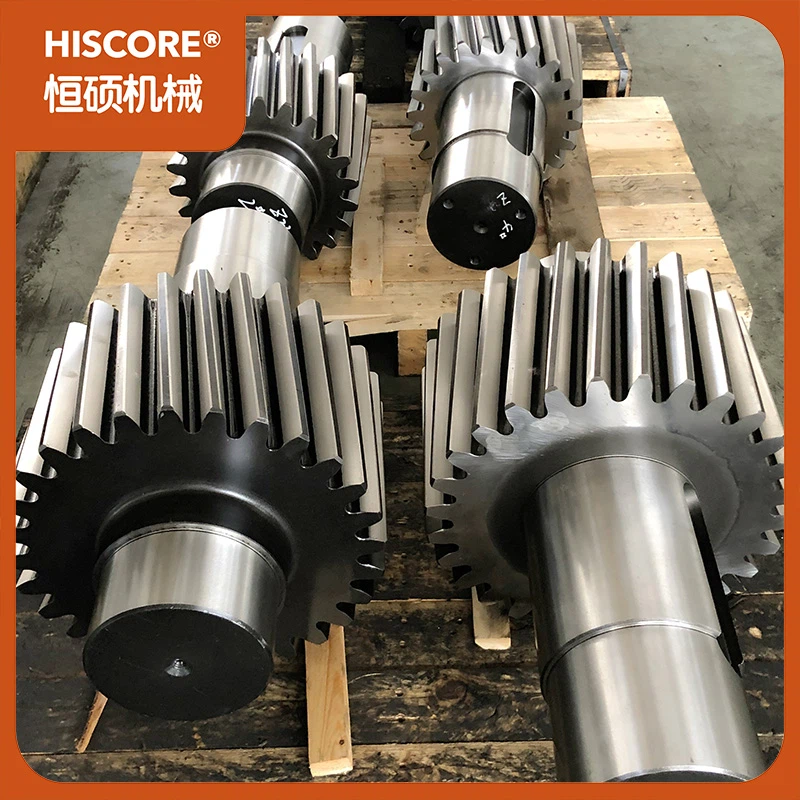
As a supplier of Wind Energy Gearbox Gears and Wind Power Gearbox Gear Shaft, we understand the critical role that gears play in wind energy systems. We use advanced manufacturing techniques, such as precision machining and heat treatment, to ensure that our gears meet the highest standards of quality and performance. Our gears are designed to withstand the harsh operating conditions of wind turbines, including high loads, variable speeds, and extreme temperatures.
Future Trends in Wind Energy Gearbox Technology
The wind energy industry is constantly evolving, and so is the technology behind wind energy gearboxes. One of the current trends is the development of direct - drive wind turbines, which eliminate the need for a gearbox. These turbines use a low - speed generator directly connected to the blades, reducing the number of moving parts and potentially increasing reliability. However, direct - drive turbines are often larger and more expensive than gearbox - equipped turbines.
Another trend is the improvement of gearbox efficiency and reliability through the use of advanced materials and lubricants. New materials, such as ceramic - based composites, are being explored for their potential to reduce weight and increase wear resistance. Advanced lubricants can also help to reduce friction and wear, improving the overall performance of the gearbox.
Contact for Procurement
If you're in the market for high - quality Wind Energy Gearbox Gears or Wind Power Gearbox Gear Shaft, we invite you to contact us for procurement discussions. We have a team of experts who can provide you with detailed information about our products, their specifications, and how they can meet your specific needs in the wind energy industry.