




How to improve the surface finish of a wind power gearbox gear shaft?
 Aug 26, 2026|
As a supplier of Wind Power Gearbox Gear Shaft, I understand the critical role that the surface finish of these components plays in the overall performance and longevity of wind power gearboxes. A high-quality surface finish not only enhances the efficiency of the gearbox but also reduces wear and tear, leading to fewer maintenance requirements and longer service life. In this blog post, I will share some effective strategies and techniques to improve the surface finish of a wind power gearbox gear shaft.
Understanding the Importance of Surface Finish
The surface finish of a gear shaft directly impacts its functionality and durability. A smooth surface finish reduces friction between the gear teeth, which in turn minimizes energy loss and heat generation. This is particularly important in wind power applications, where efficiency is crucial for maximizing power output. Additionally, a good surface finish helps to prevent the formation of micro-cracks and corrosion, which can lead to premature failure of the gear shaft.
Material Selection
The choice of material for the gear shaft is the first step in achieving a high-quality surface finish. High-strength alloy steels are commonly used in wind power gearbox gear shafts due to their excellent mechanical properties. These materials can withstand the high loads and stresses encountered in wind turbine applications. However, the material's composition and hardness can also affect the surface finish. For example, a material with a uniform grain structure and consistent hardness is easier to machine and will result in a better surface finish.
Machining Processes
The machining processes used to manufacture the gear shaft have a significant impact on its surface finish. Here are some key machining techniques that can be employed to improve the surface quality:
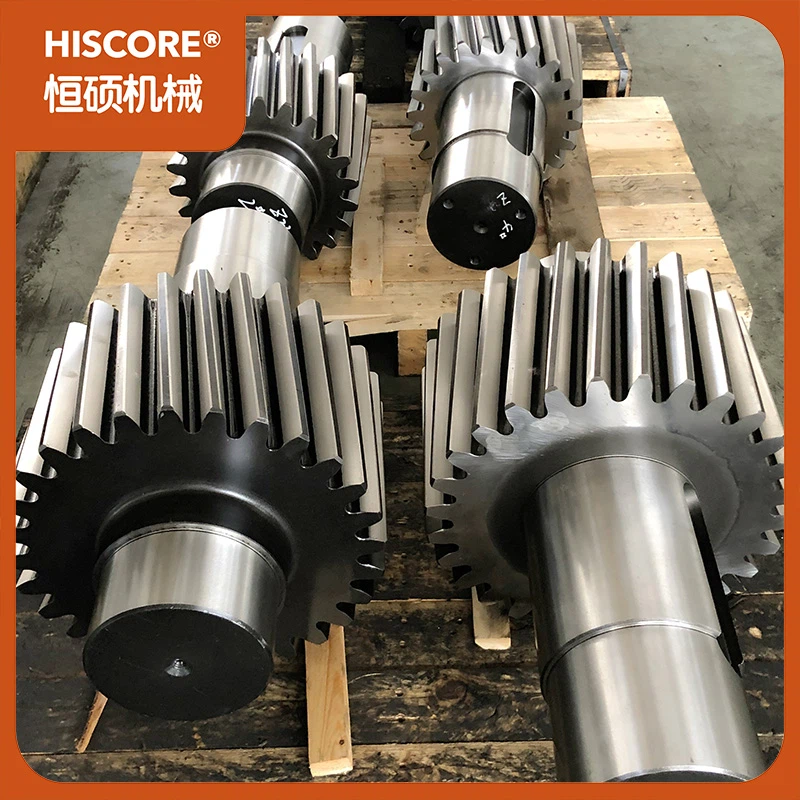

Turning
Turning is a common machining process used to shape the outer diameter of the gear shaft. To achieve a smooth surface finish during turning, it is important to use sharp cutting tools and appropriate cutting parameters. The cutting speed, feed rate, and depth of cut should be optimized to minimize tool wear and chatter. Additionally, using a coolant can help to reduce heat generation and improve the surface finish.
Grinding
Grinding is a precision machining process that can be used to achieve a very high surface finish on the gear shaft. It involves removing a small amount of material from the surface using an abrasive wheel. To obtain a smooth and accurate surface, the grinding wheel should be properly dressed and the grinding parameters should be carefully controlled. The grinding speed, feed rate, and depth of cut should be adjusted based on the material and the desired surface finish.
Honing
Honing is a finishing process that can be used to further improve the surface finish of the gear shaft. It involves using a honing tool with abrasive stones to remove a very thin layer of material from the surface. Honing can help to correct any minor surface irregularities and improve the roundness and straightness of the gear shaft. The honing process should be carried out with the appropriate honing pressure, speed, and feed rate to achieve the desired surface finish.
Heat Treatment
Heat treatment is an important step in the manufacturing process of wind power gearbox gear shafts. It can improve the mechanical properties of the material and also have an impact on the surface finish. For example, quenching and tempering can increase the hardness of the gear shaft, which can make it more resistant to wear. However, improper heat treatment can also lead to surface defects such as cracks and distortion. Therefore, it is important to carefully control the heat treatment process to ensure that the surface finish is not compromised.
Surface Coating
Applying a surface coating to the gear shaft can provide additional protection and improve the surface finish. There are several types of surface coatings that can be used, including nitride coatings, carbide coatings, and polymer coatings. Nitride coatings can increase the hardness and wear resistance of the gear shaft, while carbide coatings can provide excellent corrosion resistance. Polymer coatings can reduce friction and improve the lubrication properties of the gear shaft. The choice of surface coating depends on the specific requirements of the wind power gearbox and the operating conditions.
Quality Control
Quality control is essential to ensure that the surface finish of the wind power gearbox gear shaft meets the required standards. This involves using various inspection techniques to measure the surface roughness, roundness, and straightness of the gear shaft. Non-destructive testing methods such as ultrasonic testing and magnetic particle testing can also be used to detect any internal defects in the gear shaft. By implementing a comprehensive quality control system, we can ensure that only high-quality gear shafts are delivered to our customers.
Conclusion
Improving the surface finish of a wind power gearbox gear shaft is a complex process that requires careful consideration of various factors, including material selection, machining processes, heat treatment, surface coating, and quality control. By implementing the strategies and techniques outlined in this blog post, we can produce gear shafts with a high-quality surface finish that will enhance the performance and longevity of wind power gearboxes.
If you are interested in purchasing high-quality Wind Power Gearbox Gear Shaft or Wind Energy Gearbox Gears, please feel free to contact us for a detailed discussion and quotation. We are committed to providing our customers with the best products and services.