What are the differences between on - shore and off - shore wind energy gearbox gears?
 Jun 30, 2026|
What are the differences between on - shore and off - shore wind energy gearbox gears?
As a supplier of Wind Energy Gearbox Gears, I've witnessed firsthand the unique challenges and requirements of both on - shore and off - shore wind energy projects. The gearbox is a critical component in a wind turbine, and the gears within it play a crucial role in converting the low - speed rotation of the wind turbine blades into high - speed rotation suitable for power generation. However, on - shore and off - shore wind energy gearbox gears have several significant differences.
Environmental Conditions
One of the most obvious differences stems from the environmental conditions. On - shore wind farms are typically located on land, where the environmental conditions are relatively more stable compared to off - shore sites. On - shore sites generally have lower humidity levels, less exposure to saltwater, and a more predictable temperature range.
In contrast, off - shore wind farms are located in marine environments. The gears in off - shore wind energy gearboxes are constantly exposed to high humidity, saltwater spray, and strong winds. Saltwater is highly corrosive, which can cause significant damage to the gears over time. Therefore, the materials used for off - shore gears need to have better corrosion resistance. For example, stainless steel or specially coated steel may be used to protect the gears from rust and corrosion.
Moreover, the temperature variations in off - shore environments can be more extreme. The combination of cold sea air and the heat generated by the gearbox operation can lead to thermal stress on the gears. This requires the off - shore gears to be designed with better thermal stability to prevent premature wear and failure.
Load and Stress
The load and stress conditions also differ between on - shore and off - shore wind turbines. On - shore wind turbines are usually smaller in size and have lower power ratings compared to off - shore turbines. As a result, the gears in on - shore gearboxes are subjected to relatively lower loads and stresses.
Off - shore wind turbines are often much larger, with blade diameters reaching up to several hundred meters. These large turbines can generate significantly higher power outputs, which means the gears in the off - shore gearboxes need to withstand much higher loads and stresses. The design of off - shore gears must take into account the dynamic loads caused by the strong and variable winds at sea, as well as the additional stresses from the turbine's motion in the water.
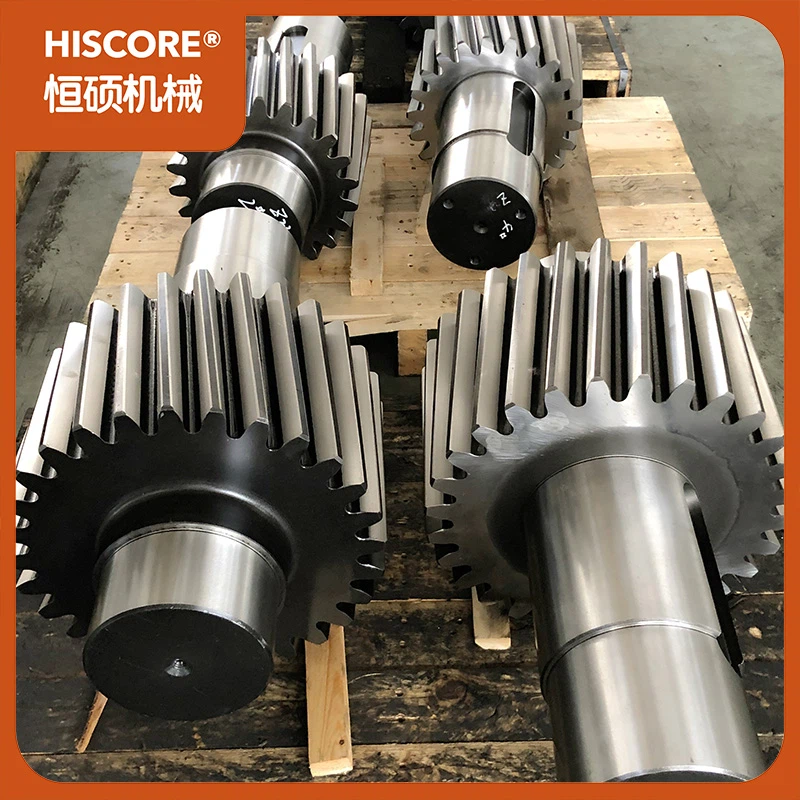
For example, the bending and torsional stresses on the Wind Power Gearbox Gear Shaft in an off - shore gearbox can be much higher than those in an on - shore gearbox. To handle these high loads, off - shore gears are often larger in size and made of stronger materials. They also require more precise manufacturing and heat - treatment processes to ensure their mechanical properties meet the demanding requirements.
Installation and Maintenance
Installation and maintenance are also areas where on - shore and off - shore wind energy gearbox gears differ. On - shore wind farms are more accessible, making it easier to transport and install the gearboxes. Maintenance crews can reach the turbines relatively quickly, and the cost of maintenance is generally lower.
In contrast, off - shore wind farms are located far from the shore, which makes installation and maintenance more challenging. Specialized vessels and equipment are required to transport and install the gearboxes, and the weather conditions at sea can often delay these operations. Maintenance also becomes more difficult and expensive due to the limited access and the need for specialized personnel and equipment.
For off - shore gearboxes, preventive maintenance is crucial to avoid costly downtime. The gears need to be regularly inspected and maintained to ensure their proper functioning. This may involve the use of remote monitoring systems to detect early signs of wear and damage, allowing for timely repairs or replacements.
Design and Manufacturing
The design and manufacturing of on - shore and off - shore wind energy gearbox gears also vary. On - shore gears can be designed with a relatively simpler structure, as they do not need to withstand the harsh environmental conditions and high loads of off - shore applications. The manufacturing processes for on - shore gears may be less complex, and the quality control requirements may be slightly lower.
Off - shore gears, on the other hand, require more advanced design and manufacturing techniques. The gears need to be precisely engineered to meet the high - performance requirements of off - shore wind turbines. Advanced computer - aided design (CAD) and finite element analysis (FEA) are often used to optimize the gear design and ensure its reliability under extreme conditions.
During the manufacturing process, off - shore gears may undergo more stringent quality control measures. This includes non - destructive testing techniques such as ultrasonic testing and magnetic particle inspection to detect any internal defects. The surface finish of off - shore gears also needs to be of a higher quality to reduce friction and wear.
Cost
Cost is another important factor that differentiates on - shore and off - shore wind energy gearbox gears. On - shore gears are generally less expensive to manufacture, install, and maintain. The lower cost is mainly due to the less demanding environmental conditions, lower loads, and easier access for installation and maintenance.
Off - shore gears, however, come with a higher price tag. The cost of materials, manufacturing, transportation, and maintenance is significantly higher for off - shore applications. The need for corrosion - resistant materials, advanced manufacturing techniques, and specialized installation and maintenance equipment all contribute to the increased cost.
Despite the higher cost, off - shore wind energy has significant potential for large - scale power generation. As the technology continues to develop and economies of scale are achieved, the cost of off - shore wind energy is expected to decrease over time.
Conclusion
In conclusion, on - shore and off - shore wind energy gearbox gears have several notable differences in terms of environmental conditions, load and stress, installation and maintenance, design and manufacturing, and cost. As a Wind Energy Gearbox Gears supplier, it is essential to understand these differences to provide the most suitable gears for each application.
Whether you are involved in an on - shore or off - shore wind energy project, we have the expertise and experience to offer high - quality gearbox gears that meet your specific requirements. If you are interested in purchasing wind energy gearbox gears or have any questions about our products, please feel free to contact us for a detailed discussion. We look forward to working with you to contribute to the development of the wind energy industry.