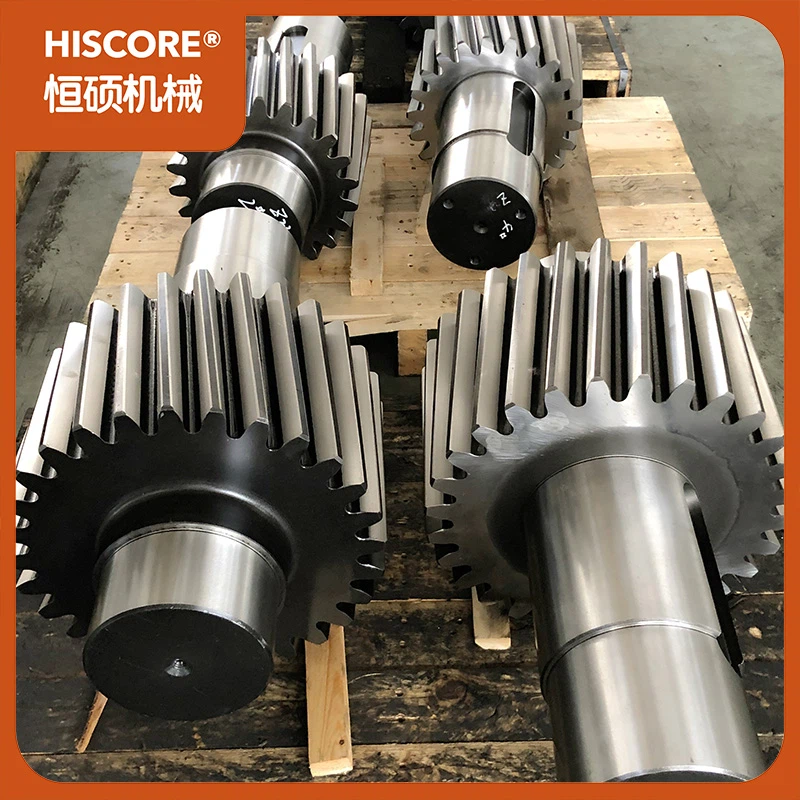
What are the performance indicators of wind energy gearbox gears?
 Oct 19, 2026|
If you've ever stood at the base of a modern wind turbine-whether on a rolling coastal ridge, a midwestern prairie, or an offshore platform hundreds of feet from shore-you've likely marveled at how these towering structures convert gentle (or fierce) gusts of wind into the electricity that powers homes and cities. What you might not see, though, is the unsung hero at the heart of every functional turbine: the gearbox, and specifically its high-precision gears. For anyone involved in wind energy, from turbine operators to gear manufacturers like me, understanding the performance indicators of these gears isn't just a technical detail-it's the difference between a turbine that runs reliably for 20+ years and one that faces costly unplanned downtime.
I started in the gear manufacturing industry over 15 years ago, focused initially on industrial gear systems for factories and heavy machinery. When I shifted to specializing in Wind Energy Gearbox Gears, I quickly learned that this niche is far more demanding than any other I'd worked in. Wind turbines operate in extreme, variable conditions: subzero Arctic winters, sweltering desert summers, constant rotation that speeds up and slows down with wind shifts, and massive torque output that the gearbox has to transfer from the turbine's slow-spinning rotor to the high-speed generator that makes electricity. To keep up, every gear in that system has to meet specific performance metrics that go way beyond basic "does it turn smoothly." In this post, I'll break down the most critical performance indicators we monitor as a supplier, how they impact end-user operations, and what we do to meet (and often exceed) them every day.
The first and most foundational performance indicator for wind gearbox gears is load-carrying capacity, and it's non-negotiable. Wind turbines don't run at a constant load; when winds surge to 50 mph or more, the rotor's torque spikes exponentially, and the gears have to handle that sudden, high load without pitting, cracking, or wearing down prematurely. For context, a typical 2.5 MW onshore turbine's main gearbox can produce up to 200 tons of torque at the input end-enough to twist a steel beam twice as thick as a telephone pole. If a gear doesn't have the right load-carrying capacity, it will develop surface fatigue (called pitting, where small craters form on the gear teeth) or even break under that torque. As a supplier, we test every gear design using a combination of computational modeling (to simulate torque spikes and variable loads over 20 years of operation) and physical testing on custom load rigs that replicate real-world wind conditions. We also ensure that our gears are made from premium alloy steels (such as carburized 16MnCr5 or case-hardened 20MnCr5) that have high tensile strength and toughness, to resist both impact and fatigue.
Closely tied to load-carrying capacity is contact fatigue strength, a specific subset that refers to how well a gear's surface holds up under repeated rolling and sliding contact with the mating gear. When two gear teeth mesh, they don't just roll past each other-they slide slightly as they engage, creating friction that wears down the gear's surface over time. This is especially problematic in wind turbines, where the gear may mesh millions of times a year (a 2.5 MW turbine spins its rotor roughly 1,200 times per hour at full load, translating to hundreds of millions of gear engagements annually). If contact fatigue strength is insufficient, the gear will develop micropitting-tiny, invisible surface cracks that grow over time, leading to larger pitting and eventually gear failure. To measure this, we run contact fatigue tests on our gears using standardized test methods from organizations like the International Organization for Standardization (ISO) and the American Gear Manufacturers Association (AGMA). We also use surface finishing techniques, like precision grinding and superfinishing, to reduce surface roughness, which minimizes friction and wear between meshing gears. For some of our higher-load models, we even apply a thin, hard surface coating (like diamond-like carbon, or DLC) to further boost contact fatigue resistance, though we're careful to balance that with the gear's overall cost and durability for end-users.
Next up is bending fatigue strength, which is about the gear's ability to resist breaking under the force of torque applied to its teeth. Think of a gear tooth as a tiny cantilever beam: when torque from the rotor pushes on the base of the tooth, that area experiences stress, especially during sudden wind gusts or when the turbine shifts between operational modes (like shutting down during extreme winds). A gear with poor bending fatigue strength will experience root fractures, where the tooth snaps off at its base-one of the most common causes of gearbox failure in wind turbines. To test this, we apply a cyclic load to a gear tooth until it breaks, measuring how many cycles it takes to fail at different load levels. This data lets us adjust the gear's design-such as modifying tooth profile, root radius, and material composition-to maximize bending fatigue strength. For example, a slightly rounded root radius distributes stress more evenly across the tooth, reducing the concentration of force that causes fractures. I always tell our clients that bending fatigue strength is what separates a gear that works for 5 years from one that lasts the full turbine's 20-year design life-so we never cut corners here.
Efficiency is another key performance indicator that's often overlooked by new operators, but it has a huge impact on a turbine's overall energy output. Every time power is transferred through a gearbox, some energy is lost to friction between meshing gears, heat, and other mechanical losses. For a 2.5 MW turbine, a 1% drop in gearbox efficiency translates to 25,000 kWh less electricity produced per year-enough to power 2-3 average U.S. homes. That might not sound like much, but when you scale that to a wind farm with 50 turbines, that's 1.25 million kWh lost annually, which adds up to thousands of dollars in revenue lost. As a gear supplier, we prioritize high efficiency in our designs by optimizing the gear tooth profile (using advanced software like Romax or KISSsoft to adjust pressure angle and profile shift) to reduce sliding friction during meshing. We also ensure precise alignment between gears during manufacturing-even a misalignment of 0.1 degrees can increase friction by 5% or more. To give you an idea, our Wind Energy Gearbox Gears are engineered to achieve a minimum of 98.5% gear mesh efficiency, which is well above the industry average, helping our clients maximize their energy production.
Durability under variable operating conditions is a performance indicator that's unique to wind energy, because unlike a factory gearbox that operates at a constant speed and load, wind turbines face constant changes. A turbine might spin at 5 RPM in a light breeze, speed up to 15 RPM in a strong gust, and then shut down completely when winds exceed 55 mph to avoid damage. These frequent speed and load changes, called "load reversals," put extra stress on gears, especially the gear teeth and shafts. For example, the high-speed shaft in a wind turbine gearbox (you can learn more about this critical component at Wind Power Gearbox Gear Shaft) experiences rapid speed changes, and the gears meshing with it have to withstand those abrupt shifts without slipping or wearing. We test our gears in our R&D lab using variable load cycles that mimic the actual operating profile of a wind turbine over its 20-year life, including start-stop cycles, speed changes, and torque spikes. We also design our gears to be compatible with a range of lubricants, because wind farms in different regions use different oils-some synthetic, some mineral-based-and the gear's material and surface finish have to work with all of them to minimize wear.
Noise and vibration levels are also important performance indicators, both for worker safety and turbine maintenance. Excessive noise in a wind turbine gearbox is not just a nuisance-it's a sign that gears are meshing improperly, which can accelerate wear and lead to failure. Vibration, meanwhile, is a key diagnostic tool for operators: by monitoring vibration levels, they can detect early signs of gear wear or misalignment before it causes a breakdown. For our gears, we aim to keep gear mesh noise levels below 85 dB at full load, which meets OSHA safety standards for workers working near turbines. We achieve this by using precision gear manufacturing (tolerance levels of less than 0.001 inch for critical features like tooth pitch) to ensure smooth, uniform meshing. We also balance all rotating components (gears and shafts) to reduce dynamic vibration, which helps extend the life of not just the gears but also other components in the gearbox, like bearings and seals.
Finally, corrosion resistance is a non-negotiable performance indicator for gears used in offshore wind turbines, which I've seen grow exponentially in the last decade. Offshore turbines are exposed to saltwater, high humidity, and harsh marine conditions that can cause corrosion on gears in a matter of years if not properly protected. Onshore turbines also face corrosion, from road salt in cold climates or industrial pollutants in urban areas. To address this, we apply a specialized anti-corrosion coating to our gears-often a zinc-nickel plating combined with a top sealant-that provides protection even in saltwater environments. We also test corrosion resistance using salt spray chambers, where we expose gears to a continuous salt fog for 1,000+ hours to ensure they don't develop rust or corrosion. For offshore clients, we go a step further by adding a secondary seal to the gear's surface, which prevents water and salt from seeping into gaps and causing damage.
Over the years, I've worked with wind farm operators across North America and Europe, and one thing I've learned is that no two turbine environments are the same. A gear that works perfectly in a flat, onshore wind farm in Texas might struggle in the cold, high-altitude turbines in Norway, or the salt-laden offshore turbines in the North Sea. That's why we work closely with each client to customize our Wind Energy Gearbox Gears to their specific operating conditions, balancing all the performance indicators I've outlined here to meet their needs. Whether a client needs higher load capacity for extreme gusts, better corrosion resistance for offshore use, or higher efficiency to maximize energy output, we tailor our designs and manufacturing processes to deliver.
If you're involved in wind energy-whether you're a turbine operator, a project manager for a wind farm, or a procurement specialist looking for reliable gear suppliers-I encourage you to reach out to discuss your gear needs. The performance of your gearbox gears directly impacts the reliability and profitability of your wind farm, and working with a supplier that understands the unique demands of wind energy can make all the difference.