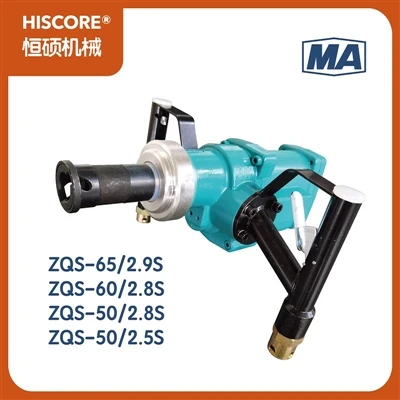
Repair methods for common Pneumatic Rib Drill malfunctions
 Aug 05, 2026|
 I. Insufficient Power, Reduced Speed/Torque
1. Clean the intake pipe and intake filter screen, and unclog any blocked exhaust holes to ensure smooth airflow.
2. Replace damaged air supply hoses, and re-seal leaking joints with Teflon tape to ensure airtightness.
3. Disassemble the motor housing, replace worn bearings and gears, reapply grease, and apply sealant evenly to all mating surfaces during assembly to prevent air leakage.
II. Slow Drilling Speed, Weak Drilling Power
1. Replace with a sharp, appropriately sized new drill bit, and straighten or replace bent or deformed drill rods.
2. For high-hardness rock formations, appropriately increase axial thrust to prevent the drill from slipping while idling.
3. Check the lubricator's oil supply status and replenish lubricating oil according to the standard of 0.5-1 ml per cubic meter of compressed air consumption.
III. Valve Body/Rotator Failure
1. Remove the valve body, take out the valve core, replace the failed sealing ring and spring, clean coal dust and impurities from the valve body, and reinstall. 2. Disassemble the gearbox, remove worn gears and bearings, replace them with qualified parts of the same model, reassemble in reverse order of disassembly, and replenish lubricating grease.
3. If the spindle is severely worn, replace the entire spindle assembly to prevent transmission jamming from continued use.
IV. Abnormal Noise and Grooves
1. Replace the damaged muffler to reduce exhaust noise.
2. Disassemble the transmission components, replace pitted and worn gears and bearings to eliminate metal-to-metal friction noise.
3. Tighten all connecting screws to prevent vibration and abnormal noise caused by loose parts.