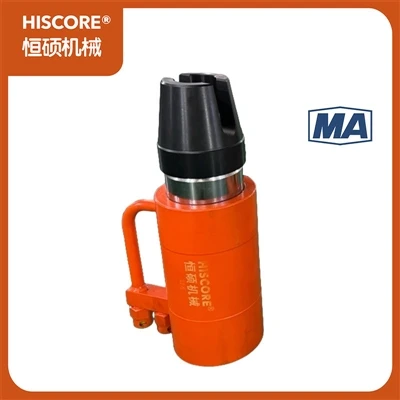
What are the precautions for operating Pneumatic Anchor Cable Tensioning?
 Jul 20, 2026|
 I. Pre-operation Preparations
1. Environmental Safety Confirmation: The gas concentration in the underground working area should be ≤1% (≤0.8% in high-gas mines), with good ventilation and no risk of water seepage or roof collapse; a warning zone should be established within a 45° radius below the working face, and personnel are strictly prohibited from standing there.
2. Equipment Matching Verification: The rated tension of the equipment should be ≥1.5 times the design tension of the anchor cable. Using equipment beyond the rated pressure (usually ≤63MPa) is strictly prohibited; pressure gauges must be calibrated regularly by the metrology department and must not be used beyond their expiration date.
3. Component Condition Inspection: High-pressure hoses should be free from damage, bulges, and oil leaks. The threads of the jack and the central cylinder must be tightened. The tool anchor clamps should be clean, free from cracks, and coated with sufficient lubricating oil.
4. No-load Test Run: After connecting the pipeline, push and pull the jack back and forth 3-5 times under no-load to purge air from the hydraulic system, confirming no jamming or oil leaks, and that the directional valve is sensitive and reliable.
II. Operational Precautions
1. Personnel Requirements: Two people must work together, one to control the oil pump and the other to operate the jack. Operators must be specially trained and familiar with the equipment structure and emergency procedures.
2. Coaxial Control for Tensioning: The jack axis must be strictly coaxial with the anchor cable to avoid eccentric force that could cause anchor cable breakage or equipment damage.
3. Graded Loading Procedure: Load in stages according to the design load, holding each stage for 2-5 minutes. Slowly increase the oil pump pressure; high-pressure reversal is strictly prohibited. Depressurize before switching the reversing valve to prevent impact damage to the pressure gauge.
4. Continuous Monitoring During Tensioning: Closely observe the pressure gauge reading, anchor cable condition, and for any abnormal noises or oil leaks. If the measured elongation deviates significantly from the theoretical value, immediately stop the machine and investigate the cause.
5. Anchor Removal Operation Requirements: The oil pressure must reach 20MPa during anchor removal to ensure proper removal and avoid difficulties in the next cable threading. After anchor removal, slowly reset the oil cylinder and then turn off the oil pump.
III. Post-Operation Cleanup and Maintenance Precautions
1. Pressure Relief and Cleaning Requirements: After tensioning, completely depressurize, remove oil pipes and seal oil nozzles; clean coal dust and oil stains from the surface of the equipment, wipe the clamps and tool anchors clean and apply oil for rust prevention.
2. Equipment Storage Standards: Store equipment in a dry, ventilated place, avoiding exposure to direct sunlight and rain; high-pressure hoses should be neatly coiled, without bending or compression, and dragging the hoses to move the equipment is strictly prohibited.
3. Hydraulic Oil Management: Use dedicated anti-wear hydraulic oil, keep the oil clean, filter or replace it regularly to prevent mud and sand from entering the system and causing wear.
4. Regular Maintenance Requirements: Check the wear of seals, threads, and clamps daily; tighten connecting bolts and lubricate moving parts weekly; calibrate pressure gauges and check for internal leakage in the cylinders monthly.
5. Explosion-Proof Compliance Requirements: Downhole equipment must meet explosion-proof requirements; electrical components must not be modified without authorization; high-pressure hoses are safety-certified components, and it is forbidden to replace them with non-original parts.