





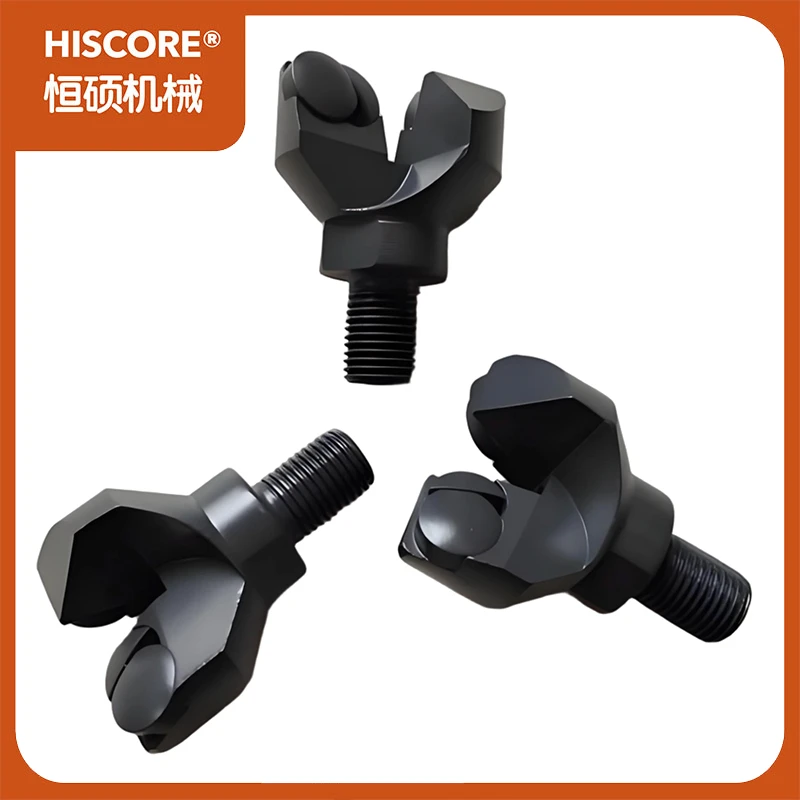
Anchor Drill Bit
Applicable Standard: MT/T 984-2025 PDC Diamond Composite Anchor Drill Bits for Coal Mines, replacing the previous MT/T 984-2006 edition.

- Product Introduction
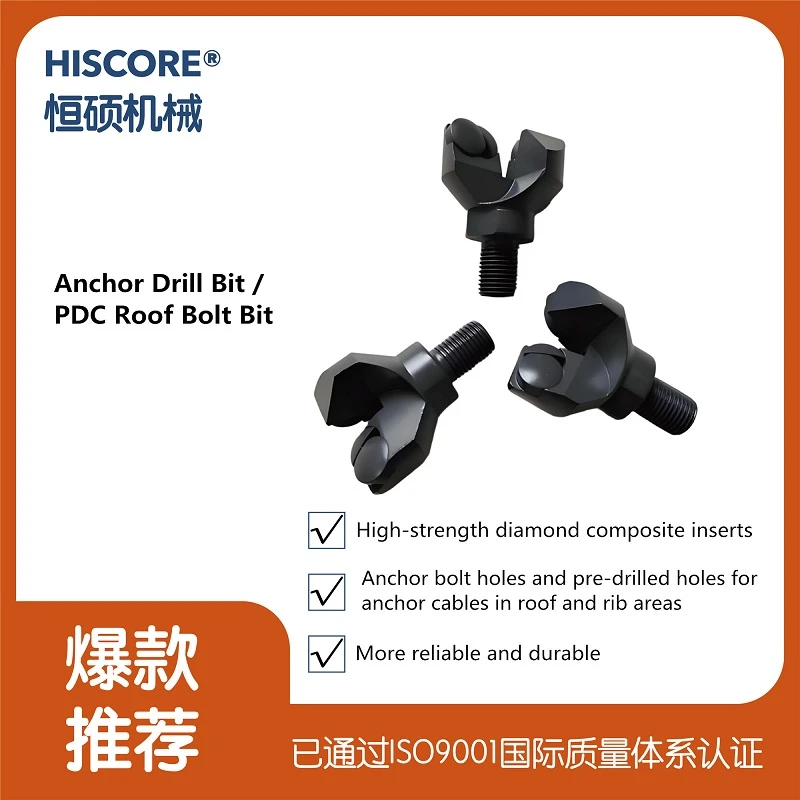
Applicable Standard: MT/T 984-2025 PDC Diamond Composite Anchor Drill Bits for Coal Mines, replacing the previous MT/T 984-2006 edition.
Application: Designed for drilling anchor bolt holes in the roof and sidewalls of underground coal mine roadways. The bit is used with roof bolters and B19/B22 hollow anchor drill rods for drilling bolt holes and installing resin anchors. It is one of the most commonly used drill bits for rock bolting and mesh support systems in underground coal mines.
Structure and Working Principle
Bit Body
The bit body is manufactured from forged 45# or 40Cr alloy steel. PDC diamond composite cutters are welded onto the bit head.
Most models feature a two-wing design, while a limited number of three-wing models are available for fractured rock formations.
Central Water Passage
The drill bit has a central water passage. High-pressure water flows through the hollow anchor drill rod and exits through the water passage in the bit.
The water cools the PDC cutters and flushes rock dust and drilling cuttings from the borehole. Continuous wet drilling is therefore required.
Connection
External threaded connections are the most common. Standard thread specifications include:
M14 × 1.5
M16 × 2
A small number of models use internal threads or plug-in connections.
The drill bit is designed to match B19/B22 hollow anchor drill rods.
PDC Cutter Types
PDC cutters are mainly available in two configurations:
1. Full-Piece PDC Cutter
Provides a larger cutting area and faster drilling performance. It is suitable for relatively intact coal and rock formations.
2. Semi-Piece PDC Cutter
Provides better impact resistance and is suitable for formations containing large amounts of gangue, fractured rock and discontinuities. The design helps reduce cutter breakage.
Common Specifications
Drilling Diameters
Common drilling diameters include:
Φ27 mm
Φ28 mm
Φ29 mm
Φ30 mm
Φ32 mm
Φ36 mm
Φ42 mm
The most commonly used underground sizes are Φ28 mm, Φ30 mm and Φ32 mm, corresponding to different anchor bolt rod sizes.
Compatible Drill Rods
B19 hollow anchor drill rods
B22 hollow anchor drill rods
Applicable Rock Formations
The bit is suitable for coal, coal-rock formations and medium-hard sandstone with a Protodyakonov hardness coefficient of f ≤ 12.
For hard rock with f > 12, PDC anchor drill bits are not recommended. A carbide button rock drill bit should be selected instead.
Classification Comparison
| Type | PDC Cutter | Applicable Formation | Main Features |
| Standard Anchor Drill Bit | Standard PDC semi-piece / full-piece cutters | Coal and soft-to-medium-hard rock formations with limited gangue | Cost-effective and suitable for general drilling requirements |
| Reinforced / High-Strength Anchor Drill Bit | High-strength spherical PDC cutters | Fractured formations, formations with high gangue content and abrasive formations | Higher impact resistance, reduced cutter breakage and longer service life |
Main Advantages and Disadvantages
Advantages
1. Excellent Wear Resistance
PDC diamond composite cutters offer high wear resistance. A single PDC bit can achieve significantly greater drilling footage than conventional cemented-carbide coal drill bits.
2. Effective Water Cooling and Cuttings Removal
Wet drilling provides effective cooling and flushing performance. The resulting borehole is more regular, with reduced risk of borehole diameter reduction, helping ensure proper resin anchor installation and anchoring performance.
3. Good Centering Performance
The two-wing design provides good initial centering and helps maintain drilling accuracy. It is well suited to the high rotational speeds of roof bolting machines.
Disadvantages
1. Dry Drilling Is Strictly Prohibited
The bit must not be operated without water. Loss of water supply can rapidly overheat and damage the PDC cutters, potentially resulting in complete bit failure.
2. Risk of Cutter Damage in Extremely Hard Formations
When drilling hard quartzite or extremely hard gangue, the PDC cutters may be prone to chipping or breakage.
3. Borehole Instability in Fractured Formations
Water injection may aggravate borehole collapse in highly fractured or unstable formations. Water pressure should therefore be properly controlled.
4. Requires Hollow Water-Passage Drill Rods
The bit can only be used with hollow anchor drill rods that provide a water passage. Solid drill rods must not be used.
PDC Anchor Drill Bit vs. Wet-Type Twist Coal Bit
| Item | PDC Anchor Drill Bit | Wet-Type Twist Coal Bit |
| Cutting Element | PDC diamond composite cutters | Cemented carbide teeth |
| Application | Anchor bolt support holes in coal, coal-rock and medium-hard rock formations, f ≤ 12 | Water exploration and gas drainage holes in coal and soft coal-rock formations, f ≤ 5 |
| Design | Short two-wing bit without long spiral flutes | Long spiral twist-flute design |
| Cuttings Removal | Hydraulic flushing of rock dust and cuttings | Spiral flutes combined with water flushing |
| Compatible Drill Rod | B19/B22 hollow anchor drill rods | Wet hollow spiral drill rods |
| Drilling Machine | Roof bolting machine | Electric coal drill or pneumatic coal drill |
| Thread | M14 × 1.5 / M16 × 2 | M14 × 1.5 / M16 × 2 |
Simple Selection Guide
Use a PDC anchor drill bit for drilling anchor bolt support holes.
Use a wet-type twist coal bit for water exploration and gas drainage holes.
These two types of drill bits are designed for different applications and must not be interchanged.
Operating Precautions
Start Drilling with Low Pressure and Low Rotation Speed
Begin the hole with light drilling pressure and low rotational speed. Do not apply excessive thrust or impact loading, as this may cause the PDC cutters to chip or fracture.
Maintain Continuous Water Supply
Water must be supplied throughout the entire drilling operation. The recommended water pressure is 0.6–1.2 MPa.
If the water supply stops, stop drilling immediately. Dry grinding of the drill bit is strictly prohibited.
Keep the Water Passage Clear
Check that the water passages in both the drill rod and drill bit are unobstructed. Blocked water passages can cause the PDC cutters to overheat and burn.
Replace Damaged PDC Cutters Promptly
If PDC cutters become chipped, cracked or detached, replace the drill bit immediately.
Continued use of a damaged bit may result in an undersized borehole, making it difficult or impossible to install the anchor bolt properly.
Reduce Drilling Pressure in Hard Gangue
When encountering hard gangue, do not force the drill bit with excessive pressure. Reduce the drilling pressure and slow down the penetration rate to reduce the risk of PDC cutter damage.
Hot Tags: anchor drill bit, China anchor drill bit manufacturers, suppliers, factory


