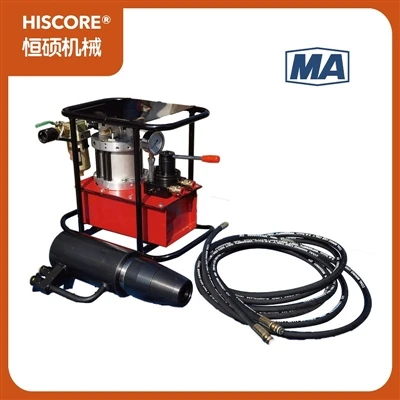
How to determine if anchor cable tensioning is in place?
 Dec 17, 2025|
1. Check the tension stress value. This is the most direct criterion. During tensioning, the hydraulic pressure gauge reading should reach the designed tension stress value. For example, if the designed tension force is 300kN, the hydraulic pressure gauge reading should stabilize at the corresponding pressure value.
2. Check the elongation value. The actual elongation value of the steel strand should be compared with the theoretical calculation value. The actual elongation value should be within ±6% of the theoretical value. If the deviation exceeds ±10%, tensioning should be stopped immediately, and the cause investigated.
3. Observe the tensioning process. Tensioning should be carried out in stages, usually in two stages: the first tensioning to 70% of the total tension, followed by a second tensioning to 100% after an interval of 3-5 days. After each stage of loading, the pressure should be stabilized for 3-5 minutes, observing whether the pressure gauge and displacement gauge readings are stable.
4. Check locking and protection. After tensioning is in place, locking should be performed according to the designed locking value. Finally, exposed steel strands must be sealed and protected with concrete as per design requirements to prevent corrosion.
Key Points Summary
Dual Control Principle: Both stress and elongation requirements must be met simultaneously; judgment cannot be based on only one.
Equipment Calibration: Before tensioning, equipment such as jacks and oil pumps must be calibrated to ensure accurate data.
Slurry Strength: During tensioning, the mortar strength inside the hole must reach at least 70% of the design strength.